1 / 6
7 monthsAge
MixedSex
£150Price
Hermanns Tortoise (Baby / Hatchling)
Tortoise1 hour
Tortoise7 monthsMixed
£150
Replies within 12 hours
Description
Hello. I have over 25 years experience breeding and raising Hermann’s tortoises - and I offer free advice for the rest of your tortoises life. I know how to raise healthy tortoises with smooth shell growth.
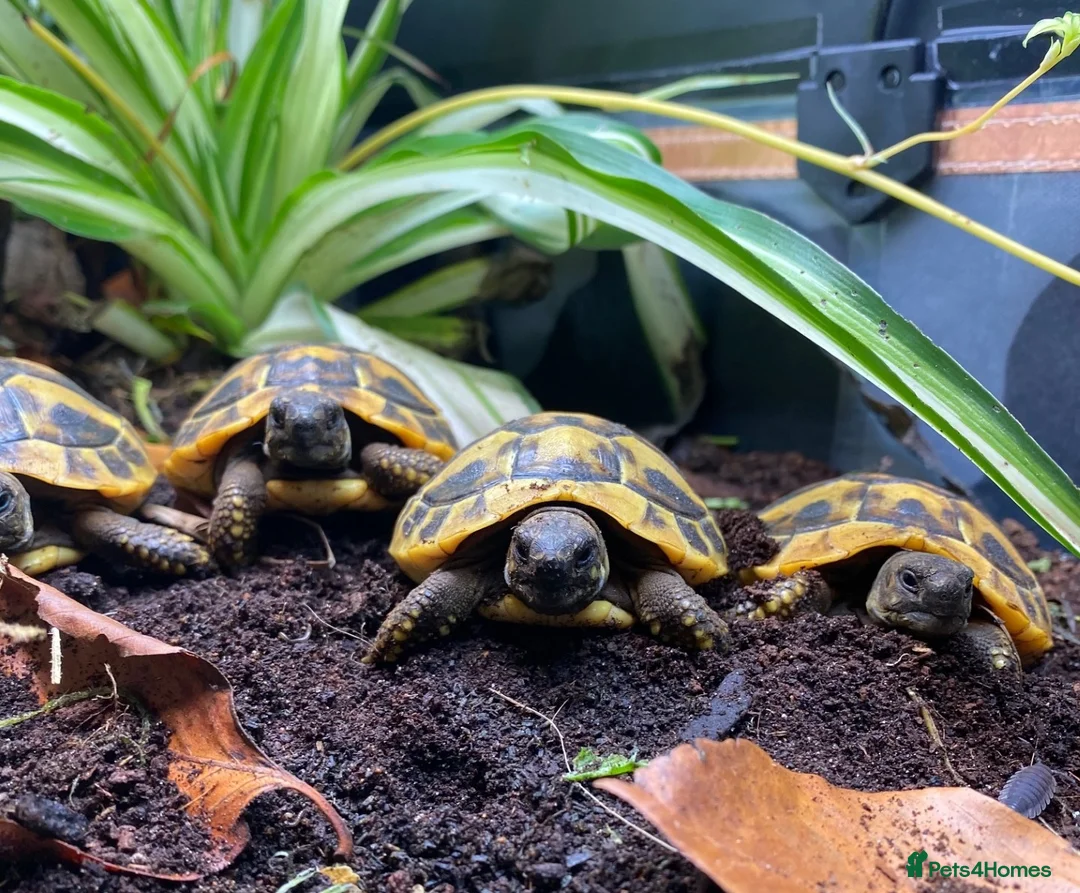
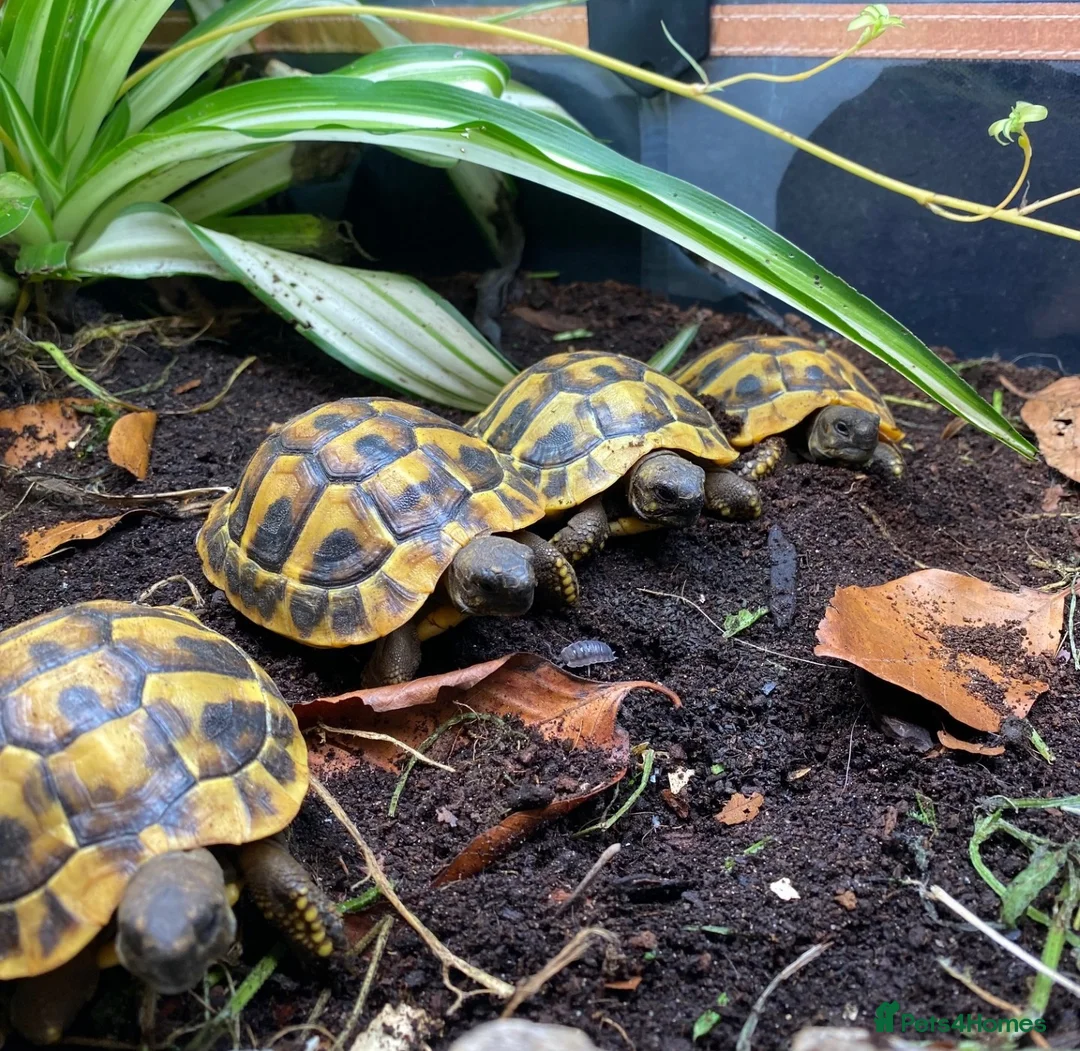
The babies / youngsters for sale are Eastern Hermanns (Testudo hermanni boettgeri) - hatched in August of 2025. If you would like any more photos or information just let me know.
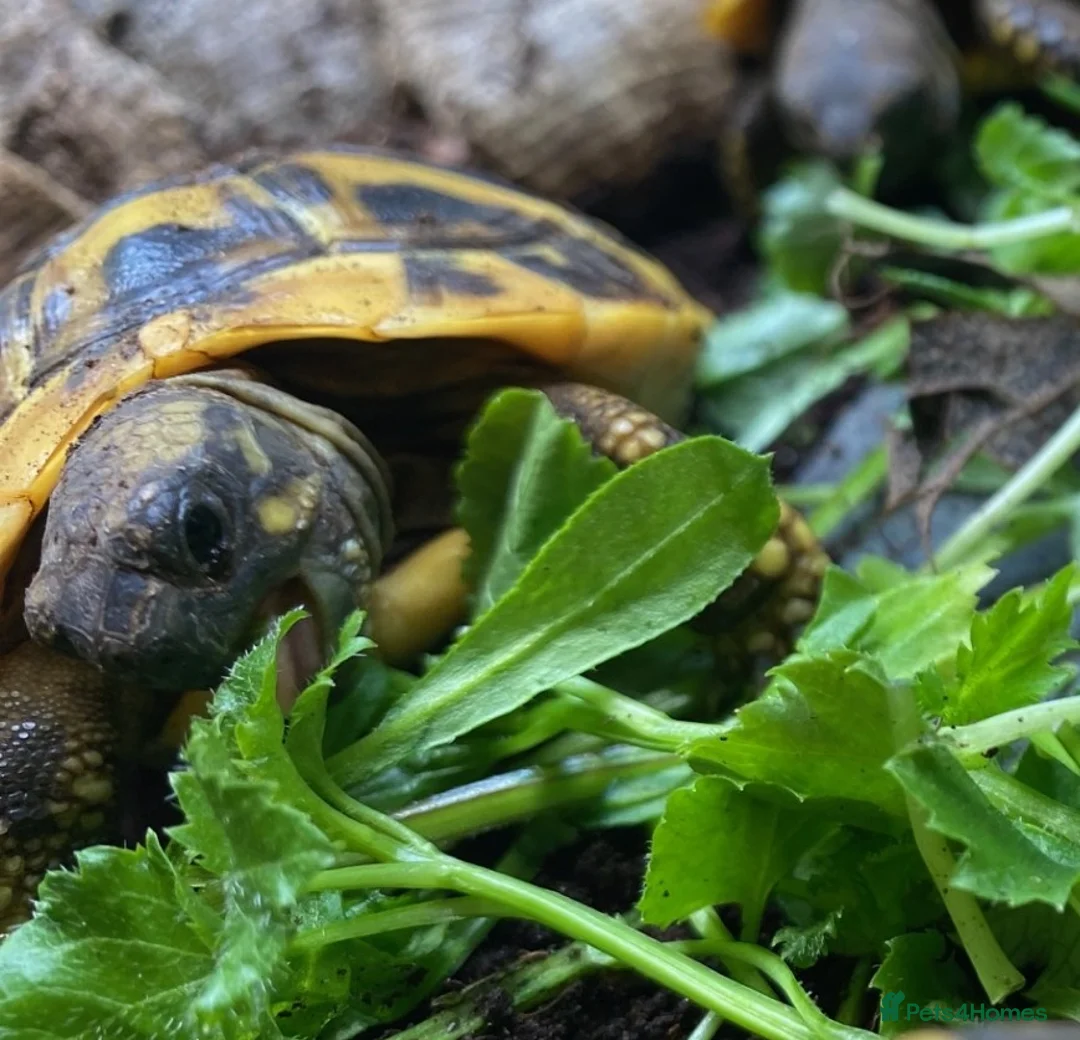
These babies have had a perfect start to life with a varied weed diet, optimum humidity, access to calcium and 12 percent UVB lighting.
I have been raising Hermann hatchlings for nearly 30 years, and in captivity the best growth occurs when you provide a good amount of humidity.
An overview of what you need:
Enclosure: A large vivarium or a large deep opaque plastic tub with a lid (some ventilation holes in lid). Tortoise tables are okay, but it is difficult to get a good amount of humidity in them - so you should really create a roof of some type for it if you want to use one. Vivariums are much better than tortoise tables, as it is much easier to create the correct habitat.
Substrate: Top soil and coconut coir mix - I use a 30 / 70 mix. Kept moist at all times (not wet) and loose to enable burying (which is natural hatchling behaviour).
Humidity: 80 - 85 percent is excellent - this creates optimum shell growth conditions.
Cork bark and or cork bark tunnels (they like to sleep under these)
Spray bottle for spraying enclosure each day.
Shallow water dish.
Cuttlefish bone and or natural limestone / chalk calcium rocks (they will bite on these for calcium)
Some piles of moss can be great for burying into and for humidity (optional).
Flat slate (place the food on this, it helps to keep the beak trimmed / worn down)
Lighting: Arcadia UVB 12 percent strip bulb. In smaller enclosures and vivariums you can use a 12 percent UVB strip bulb (Arcadia is best) with a ceramic heat source (I would go for a 50 watt ceramic heater - do not go higher than 50 watts in a vivarium) … or you can you used heat mats attached to the side of the enclosure instead of the ceramic heater.
Food: Many different types of weeds and flowers - such as mallow, campanula, dandelion, clover, plantain, cats ears weed, galium aparine, vetch, sedums etc etc. I give mine the occasional small amount of soaked Nutrazu (Mazuri) pellets - around once a week. Very occasional fruit (berries). Coz lettuce, romaine lettuce and lambs lettuce can also be offered from time to time.
Adv. ID:2waCOMMKL
Find your pet with Pets4Homes
The secure choice with added benefits like payment protection and a health guarantee.
1. IntroductionConnect safely with the seller
2. ViewingArrange to meet your pet
3. ReservationPay securely through us
4. CollectionBring your new pet home
Views
6
Favourites
0
Location
High Wycombe, Buckinghamshire
Adv. Type
For sale
Age
7 months, 14 days
Breed
Tortoise
Is Endangered Species
Sex
Mixed
42 minutes
Replies within 12 hours
Member since2019Similar adverts
- tortoise in norfolk
- tortoise in essex
- tortoise in manchester
- tortoise in bolton
- tortoise in bloxwich
- tortoise in london
- tortoise in somerset
- tortoise in lincolnshire
- tortoise in bristol
- tortoise in hampshire
- male tortoise
- female tortoise
- leopard tortoise
- sulcata tortoise
- male horsefield tortoise
- spur thigh tortoise
- russian tortoise
- baby horsefield tortoise
- horsefield tortoise enclosure
- tortoise equipment
- female horsefield tortoise
- baby tortoise
- horsefield tortoise
- red foot tortoise
- vivarium
- garden tortoise
- hermanns tortoise
- red footed tortoise
- tortoise enclosure
- tortoise table