

Savannah Kittens for sale
Savannah Cats, a crossbreed between domestic cats and the serval, are renowned for their vivid coat patterns and social personality. These felines sport coats in various hues, from silver and smoke to black and brown, often dotted with bold, dark spots that mirror their wild ancestors.This breed, divided into F1 to F5 generations, ranges in size, with F1 Savannahs being the largest. A distinctive trait of Savannahs is their tall, slender physique, giving them a wild, agile look while maintaining a pet-like demeanor. Famed for their intelligence and curiosity, Savannah cats are interactive pets, enjoying play and interaction .Savannah Cats are also known for their loyalty, often forming strong, affectionate bonds with their families. Delve deeper into vital information on our Savannah Cat Buying Advice page.
 11
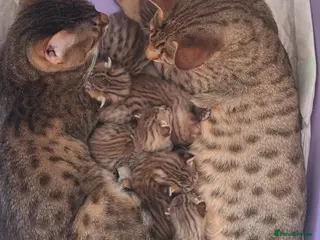
11SAVANNAH TICA STF7 EUROPA SILVER
Savannah
TOPCATSUK TICA REGISTERED BREEDER LICENCED ************ R.M.B.C. TICA SBTF7 silvergirl Europa Adult sized already at 6 months and will continue to grow until about 2 years old. Freindly and confid
 22
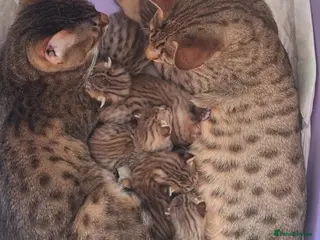
22SAVANNAH TICA SBTF6 MERCURY SILVER
Savannah
TOPCATSUK TICA REGISTERED BREEDER LICENCED ************ R.M.B.C. TICA SBTF6 Male Silvered MERCURY Good sized already at 6 months and will continue to grow until about 2 years old. Freindly and conf
 22
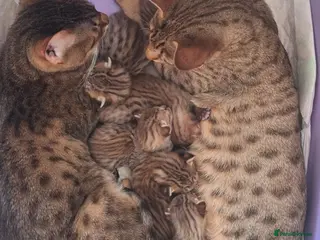
22SAVANNAH TICA SBTF7 MARS HUGE BOY
Savannah
TOPCATSUK TICA REGISTERED BREEDER LICENCED ************ R.M.B.C. TICA SBTF7 HUGE Male MARS. Adult sized already at 6 months and will continue to grow until about 2 years old. Freindly and confident
 31
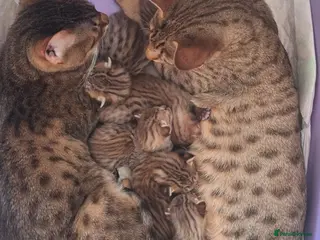
31SAVANNAH TICA SBTF7 JUPITER HUGE BOY
Savannah
TOPCATSUK TICA REGISTERED BREEDER LICENCED ************ R.M.B.C. TICA SBTF7 HUGE Male JUPITER. Adult sized already at 6 months and will continue to grow until about 2 years old. Freindly and confid
 21
21Savannah TICA SBTF HUGE BOY SATURN
Savannah
TOPCATSUK TICA REGISTERED BREEDER LICENCED ************ R.M.B.C. TICA SBTF7 HUGE Male Saturn . Adult sized already at 6 months and will continue to grow until about 2 years old. Freindly and confid