Description
START YOUR OWN MEALWORM COLONY — GROW YOUR OWN LIVE FOOD!
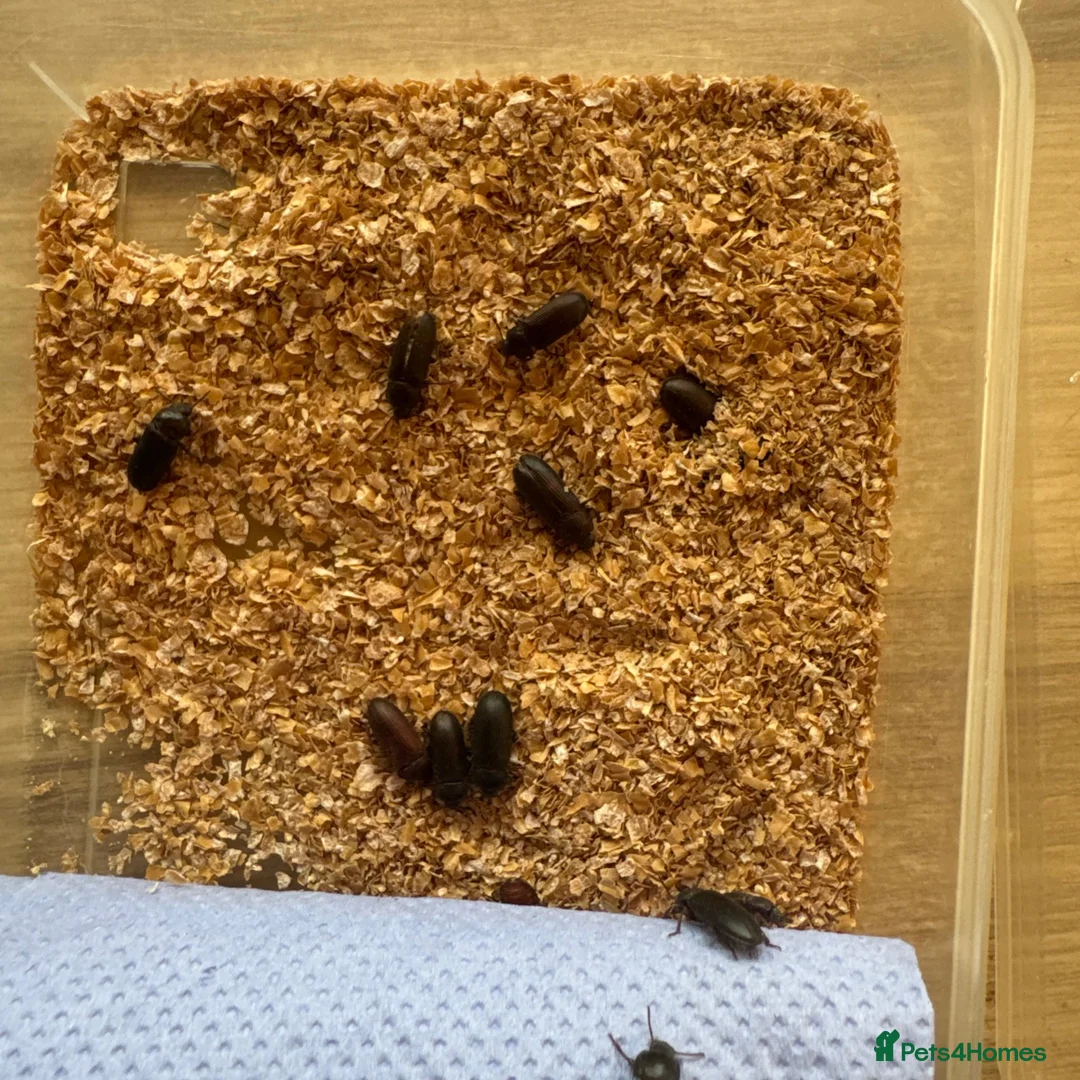
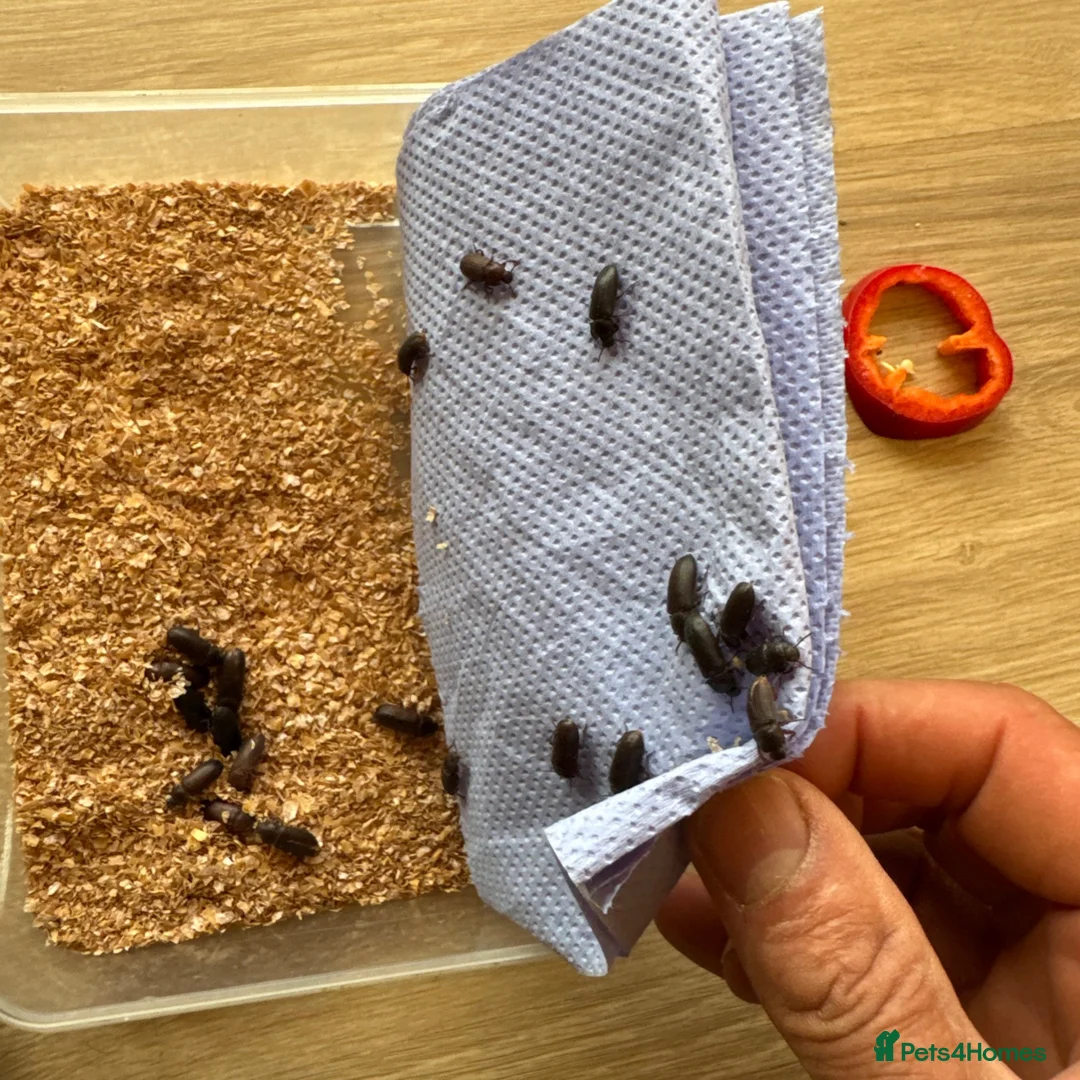
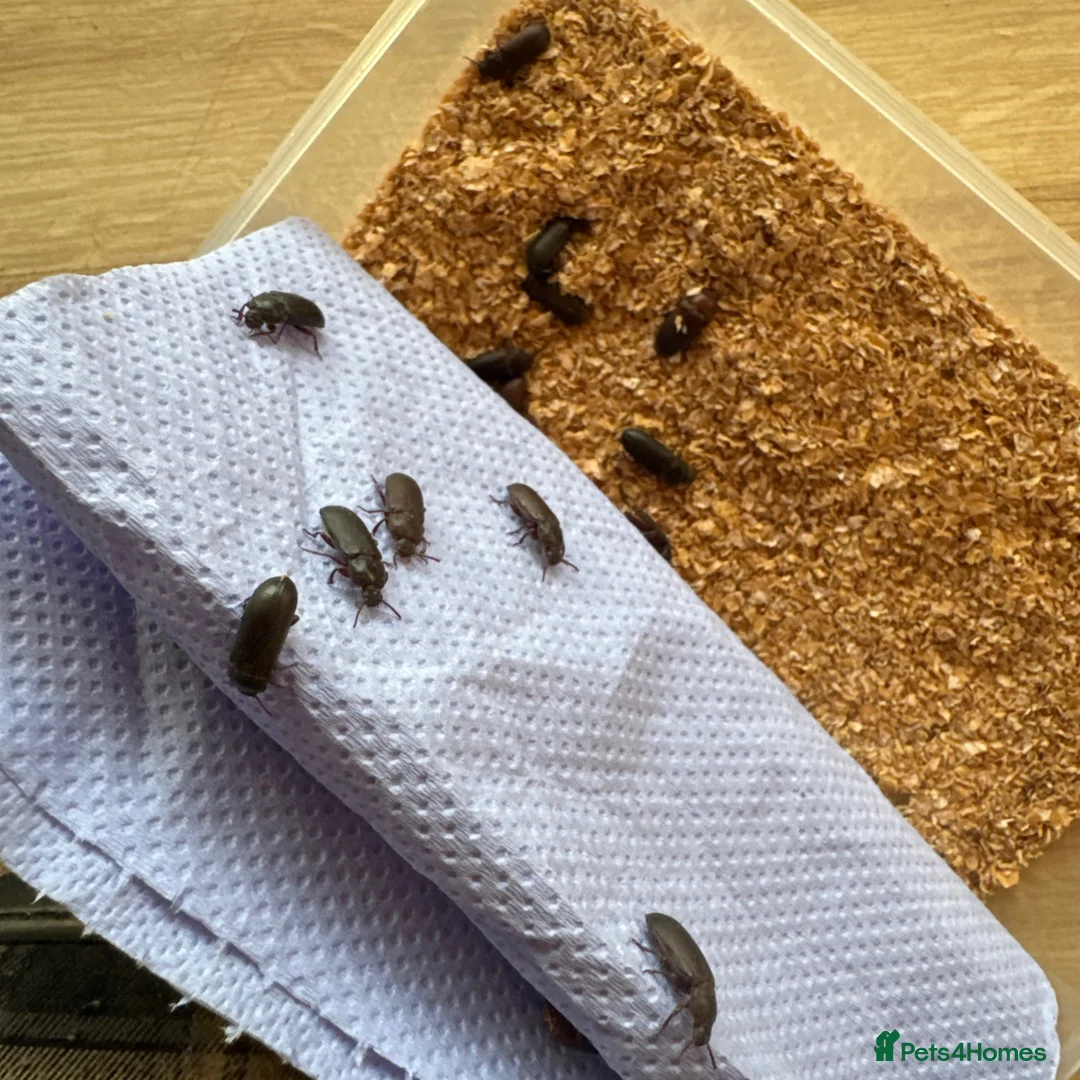
Turn a small group of live adult darkling beetles into the foundation of your own mealworm-breeding colony.
These adult mealworm beetles (Tenebrio molitor) are supplied for breeding. Start with the adult stage and skip waiting for your first mealworms to grow, pupate and become beetles.
SMALL BEETLES — BIG BREEDING POTENTIAL!
A female mealworm beetle can lay approximately 250–500 eggs over her lifetime under suitable conditions.
Just 10 breeding females could potentially lay 2,500–5,000 eggs between them — giving your colony the potential to produce thousands of mealworms!
This illustrates egg production, not a guaranteed harvest. The number of females, their age, temperature, feeding, hatching success and survival all affect production.
WHY START WITH ADULT DARKLING BEETLES?
• Get breeding sooner: start at the adult stage of the lifecycle.
• Grow your own: establish a home supply of live mealworms.
• Reduce repeat purchases: a productive colony can help reduce ongoing live-food costs.
• Control their food: know what your feeder insects are eating.
• Keep the colony going: retain some offspring to become the next generation of breeders.
Buying mealworms provides food immediately. Buying adult breeding beetles gives you a head start on producing future batches yourself.
WHY FEED LIVE MEALWORMS?
Mealworms offer more than an appealing, wriggling treat:
• PROTEIN: supplies building blocks for growth, muscle maintenance, tissue repair and feather production.
• ESSENTIAL AMINO ACIDS: includes lysine, leucine and valine.
• ENERGY-RICH FATS: provide concentrated dietary energy.
• UNSATURATED FATTY ACIDS: includes linoleic acid, an essential omega-6 fatty acid.
• MINERALS: contains phosphorus, potassium, magnesium, iron and zinc.
• B VITAMINS: contributes nutrients involved in normal energy metabolism.
• MOISTURE: live mealworms contribute water as part of the diet.
• NATURAL FEEDING ENRICHMENT: movement encourages hunting, pecking and foraging.
• GUT-LOADING POTENTIAL: feed your mealworms an appropriate nutritious diet before offering them to your animals.
Nutrient levels vary with diet and rearing conditions. Mealworms are supplementary food, not a complete diet. They are naturally low in calcium relative to phosphorus; reptiles may need appropriate calcium dusting or other supplementation.
WHO CAN EAT MEALWORMS?
Suitable-sized live mealworms can supplement the diets of many insect-eating animals, including:
POULTRY & GAME BIRDS
Chickens, hens, growing chicks, quail and pheasants. Offer treats in moderation alongside complete feed; chicks need suitable chick grit when eating foods that require it.
WILD & GARDEN BIRDS
Robins, blue tits, great tits, wrens, starlings and blackbirds — an appealing live-food option for insect-eating garden birds.
REPTILES & OTHER INSECT-EATING PETS
Leopard geckos, African fat-tailed geckos, bearded dragons, insect-eating skinks, collared lizards, anoles and some chameleons. Also suitable as occasional feeders for some frogs, toads, tarantulas and scorpions.
Adv. ID:Pa2b0hT-X