Buy Snails Invertebrates for sale
The Giant African Land Snail, also known simply as the African Snail, originates from East Africa and is renowned for its impressive size and adaptability. Physically, these snails boast a robust, conical shell that can grow up to 30cm, often marked with distinct bands of brown and cream. Their soft bodies are usually a pale beige, with a slow but steady movement typical of land snails. Temperament-wise, Giant African Snails are gentle and non-aggressive, making them popular as exotic pets. They are hermaphrodites requiring a partner for reproduction, which involves a fascinating mating process including the exchange of sperm. These snails thrive in warm, humid environments, necessitating careful habitat management, including adequate moisture and a diet rich in vegetables and calcium. Due to their rapid breeding rate and care needs, they are suitable for responsible pet owners who can commit to their upkeep. Keywords such as “giant african land snail for sale,” “african land snail for sale,” and “snails for sale UK” reflect their popularity in the UK market where enthusiasts seek these unique pets for their distinctive characteristics and manageable temperament.
Boosted Adverts
BOOST
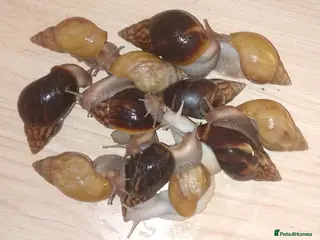
Albino giant African land snails
Snails
1 yearAge
MixedSex
£5Price
If I remember correctly they are Lissachatina Reticulata £5 per unless bulk buy, then we can come to a reasonable price together. Shipping will need to be covered witch is a tenner, and if u wanna come pick them up then your more then welcome. Sold alot of this group when they were only a few months old, we now have more clusters of eggs and still have to many snails so
High Wycombe, Buckinghamshire
BOOST
Giant African land snails
Snails
7 monthsAge
MixedSex
£6Price
Giant African land snails (Lissachatina fulica) for sale. Their shells are around 4-6cm. They come in two different colours, either having a dark shell or a light shell. Shipping is an additional £5. Send me a message with what colours you want, and how many. Discounts are available if you buy multiple.
Letchworth Garden City, Hertfordshire
5.0
All adverts
 4
4Giant 'retic' african land snails
Snails
4 monthsAge
MixedSex
£2Price
Giant african land snails with beautiful shell colour and white body current shell size 4-4.5cm. Would only like serious buyers please. I am happy to post them there is an additional £11.50 for this s
ID Verified
Peterborough, Peterborough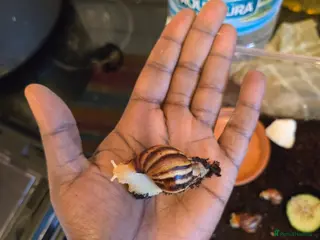 4
4Juvenile african snails buy 1 get 1 free
Snails
8 monthsAge
MixedSex
£10Price
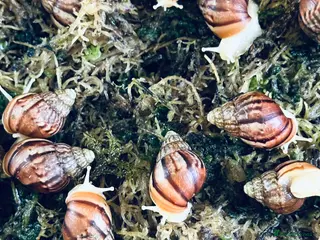
🐌 African Giant Land Snails for Sale 🐌 Healthy 5-month-old African Giant Land Snails available. I currently have both brown (wild type) and albino snails. They are active, well cared for, and rais
Milton Keynes, Milton Keynes
 5
5Albino Giant African Land Snails
Snails
5 monthsAge
MixedSex
£5Price
Giant African land snails for sale – a unique and fascinating pet that’s perfect for kids and beginners! The ones I have available are babies at around 3cm, and they’re the stunning albino variation w
ID Verified
Barnsley, South Yorkshire 7
7Giant African Land Snails
Snails
4 monthsAge
MixedSex
£3Price
Hatched 16 Jan 2026. Measuring currently at 3.5-4cm (shell size) 'retic' white body with classic shell. Shell patterns change as grows very good eaters. Favorite food romaine lectuce, courgette, cucum
ID Verified
Peterborough, PeterboroughNot enough Buy Snails Invertebrates for sale adverts right now?
Save your search to get notified when new ones are posted or adjust your search filters.
Recommended for you
FAQs
Yes, a snail is an invertebrate as it lacks a backbone. It belongs to the class Gastropoda within the phylum Mollusca, which includes soft-bodied animals often protected by a shell.