Sheepadoodle Puppies for sale
3 Sheepadoodle Puppies for sale
The Sheepadoodle, a captivating cross between the Old English Sheepdog and the Poodle, is celebrated for its playful nature, intelligence, and hypoallergenic coat. Available in multiple generations and sizes, F1 Sheepadoodles (50/50 mix) offer a balanced blend of both parent breeds with wavy to straight coats, while F1B Sheepadoodles (75% Poodle, 25% Old English Sheepdog) provide curlier, more allergy-friendly coats ideal for families with sensitivities. F2B Sheepadoodles (62.5% Poodle) offer the most consistent non-shedding qualities with beautiful curly or wavy patterns. From mini to standard sizes, this breed fits seamlessly into households of all dimensions, with coats showcasing stunning combinations of white and black, brown and white, merle, parti, and tuxedo markings reminiscent of their Sheepdog heritage.
Sheepadoodles are intentionally bred to combine the loyalty and herding instincts of the Sheepdog with the Poodle's intelligence and low-shedding attributes. Their affectionate and sociable demeanor, coupled with their cognitive prowess, makes them excellent choices for families with children and other animals. Given their active lineage, regular exercise and stimulating play are essential for this spirited breed to thrive.
Sheepadoodle
Sheepadoodle
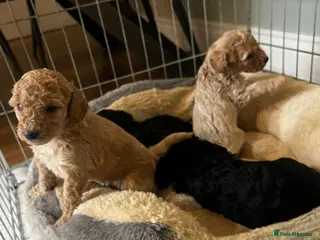
Sheepadoodle puppies are awaiting their forever homes. Mum is a Sheepadoodle she is our family pet. She has been a brilliant mother raising these beautiful puppies, She has been thoroughly health tested. You can have a copy of these certificates when you take your new puppy home. They will be available to see when you come to view the puppies with their mum. Dad is a mi
Micro mini Sheepadoodles 1 girl Left!
Sheepadoodle
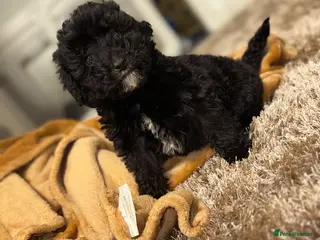
Only 1 little girl Left available 💕I am happy to announce . arrival of our beautiful micro mini Sheepadoodles puppy’s 🥰 These pups will be raised in a busy, family household home! Used to household noises and sounds, we will play a puppy socialisation cd to them every day to ensure they’re used to fireworks ambulances etc… Before Leaving they will have their microchips
FAQs
What are the downsides of owning a Sheepadoodle?
Sheepadoodles have some downsides including their large size and strength, which can make them challenging to manage for some owners. They require consistent, regular exercise and have sensitive stomachs prone to digestive issues that need careful feeding. Additionally, their coat demands frequent grooming and brushing to prevent matting, and they may show natural herding behaviours like nipping that require patient training.
How much does a Sheepadoodle puppy cost?
Are Sheepadoodles good house dogs?
Do Sheepadoodles shed a lot?