Micro Aussiedoodle Puppies for sale in Manchester, Greater Manchester
1 Micro Aussiedoodle Puppies for sale in Manchester, Greater Manchester
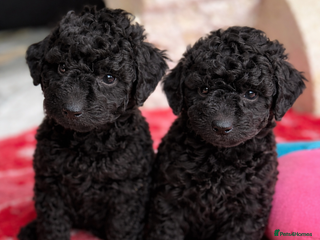
The Aussiedoodle, also known as the Aussie Doodle, is a popular hybrid created by crossing an Australian Shepherd with a Miniature or Standard Poodle. This designer breed blends the Poodle’s intelligence and low-shedding coat with the Australian Shepherd’s loyalty, energy, and playful spirit. Aussiedoodles vary widely in size and coat type—ranging from curly to wavy or straight—and come in colours such as black, blue merle, and red. They are often considered low- to non-shedding, making them appealing to allergy-sensitive families, although no breed is completely hypoallergenic.
Aussiedoodles are found in several generations, including F1, F1b, F1bb, F2, and F2b. F1 Aussiedoodles are a 50/50 mix of Australian Shepherd and Poodle, with coat types that can vary from straight to wavy or curly. F1b Aussiedoodles—typically 75% Poodle—tend to have curlier, more allergy-friendly coats and shed less. F1bb Aussiedoodles (around 87.5% Poodle) feature the tightest curls and are the most likely to be low-shedding. F2 Aussiedoodles, bred from two F1 parents, show more coat variability and shedding differences. F2b Aussiedoodles, resulting from an F1 crossed with an F1b, offer a more predictable balance of wavy or curly coats along with improved hypoallergenic qualities.
Highly intelligent, energetic, and affectionate, Aussiedoodles need substantial daily exercise and mental stimulation—such as agility, obedience work, or puzzle games—to stay happy and well-behaved. They are playful, loyal companions but may show herding tendencies around children that require gentle training. Their coat requires regular care, including frequent brushing and professional grooming every 6–8 weeks. Increasingly popular in the UK, many owners search for “Aussiedoodle puppies for sale” or “mini Aussiedoodle for sale,” reflecting the breed’s growing demand. For active families or individuals prepared to meet their grooming and exercise needs, the Aussiedoodle is a wonderful and engaging companion.
FAQs
What are the main downsides of Aussiedoodles?
Aussiedoodles may display herding behaviour, which can be challenging in homes with small children or other pets, and they often come with a high purchase price due to their popularity as a designer breed. They require significant grooming and can be prone to health issues typical of their parent breeds such as ear infections and hip dysplasia.
Are Aussiedoodles good family dogs?
Do Aussiedoodles shed a lot?
How much does an Aussiedoodle puppy cost?